








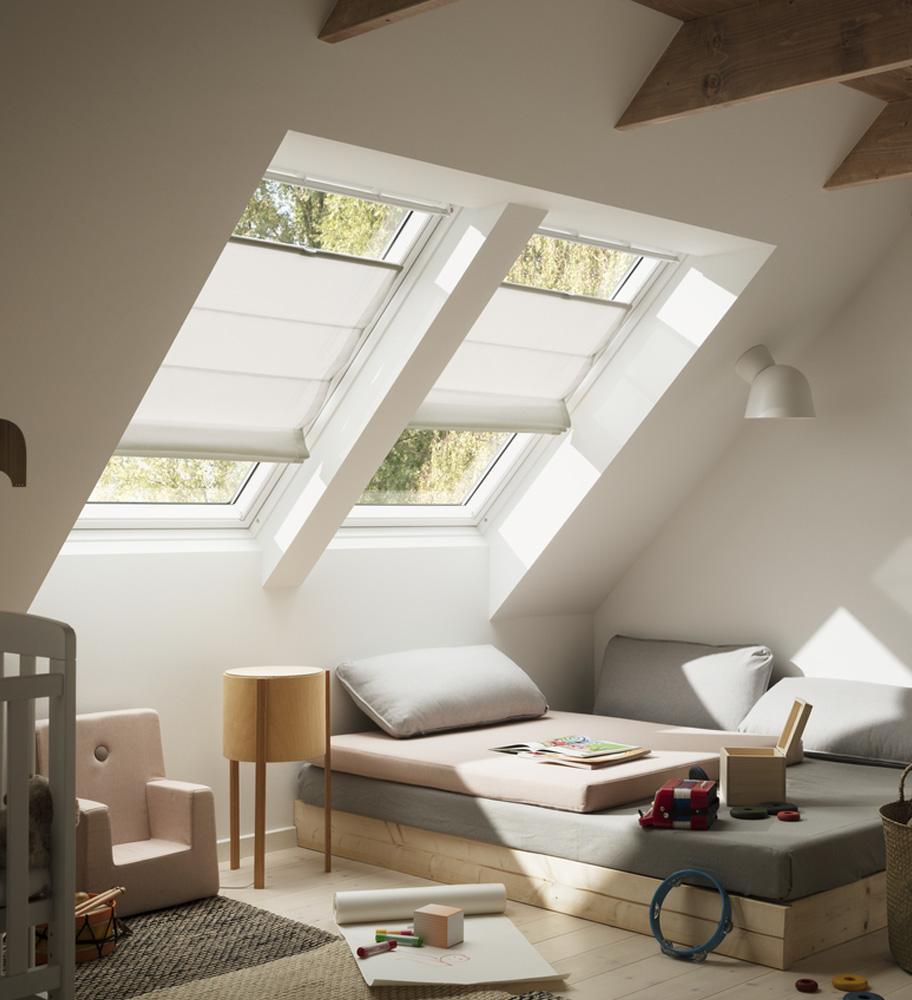
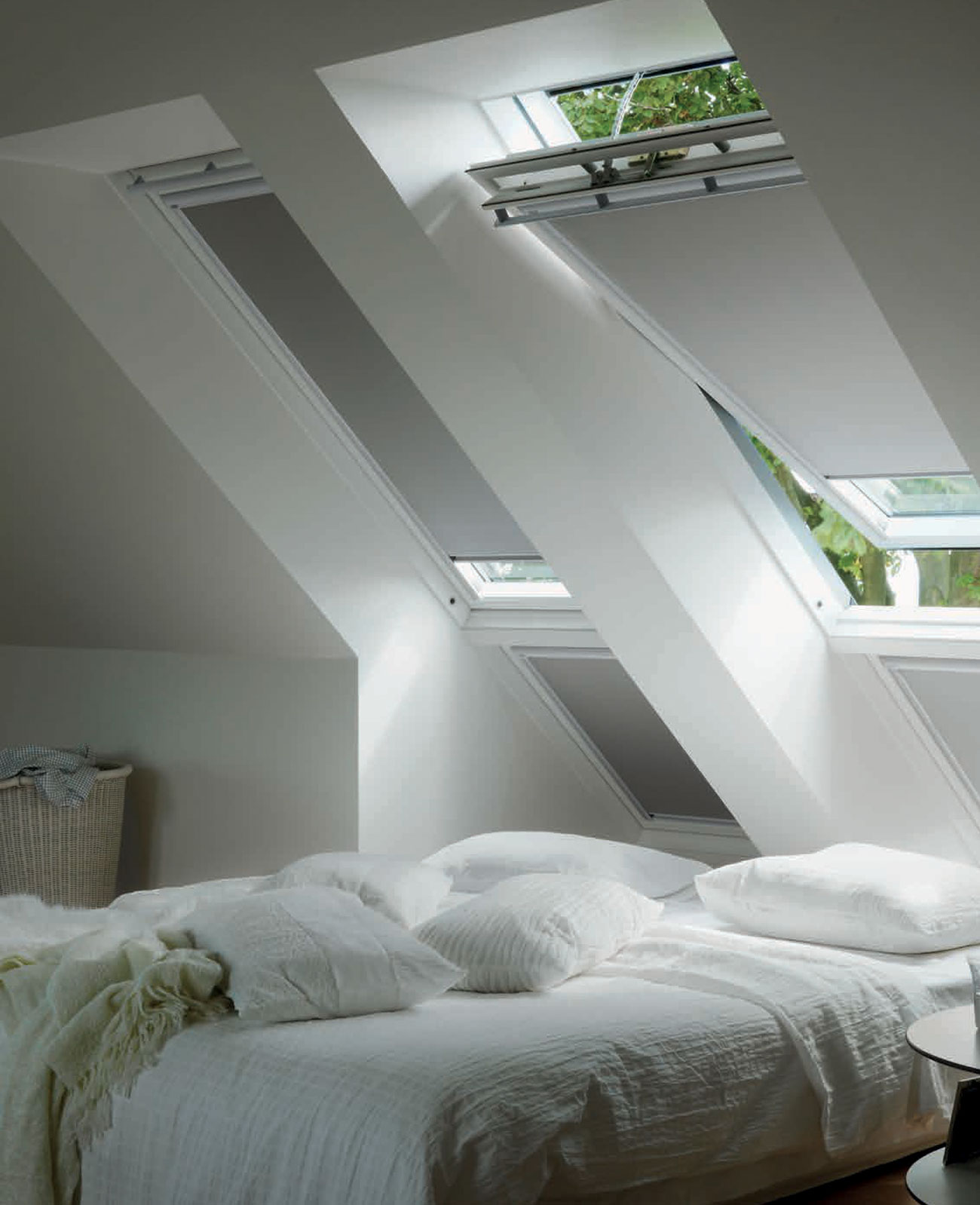
Attic conversions and roof windows are everywhere in Northern Irish homes, and they create two problems no ordinary blind solves. The room bakes in summer because the sun hits the glass directly, and it never gets properly dark in the mornings because a standard blind cannot hold itself against sloped glass. This guide covers what makes roof window blinds different, how to identify the window you already have, which fabric solves which problem, and what to do about a blind that has stopped working.
Why roof window blinds are built differently
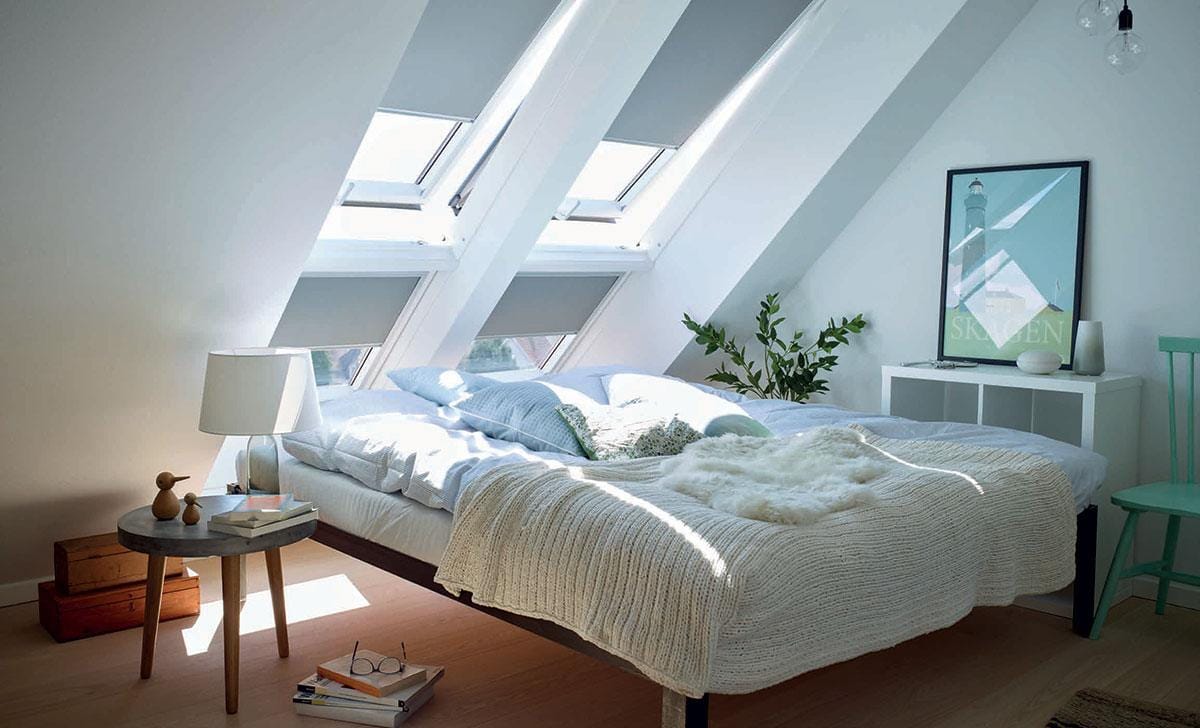
On a vertical window, gravity does the work. On a sloped window it works against you, so a roof window blind runs in side channels that hold the fabric flat to the glass and let it stop at any point on the slope. Without them the fabric sags away from the glass, light floods in around the edges, and the blind swings every time the window is opened. This is also why a roof window blind normally has a bottom bar you push by hand or a pole, rather than a chain.
Find your window size code first
Almost every roof window carries a data plate on the top edge of the sash, visible once you swing the window open. It gives the manufacturer, the window type and a size code made of two letters and two digits, such as MK04, UK08 or CK02. That code is the fastest and most reliable way to identify the window, and it is the single most common thing people get wrong when ordering a blind.
- Photograph the whole plate. Do not copy the code out by hand. One wrong character orders a blind for a different window, and made-to-measure blinds cannot be returned.
- The code is not the same as the size in millimetres. It is a manufacturer reference, and codes differ between brands, so an MK04 is not a universal size.
- No plate, or unreadable? That is common on older windows, and it is not a problem. The opening can be measured directly instead, which is exactly what a home survey is for.
- Check every window. Roof windows in the same room are often different sizes, particularly where a dormer and a slope meet.
If the window is not a VELUX at all, the same principle applies. FAKRO, Keylite and Dakea windows all carry their own plates and their own coding, and a made-to-measure blind can be built for any of them. Older windows, painted-over plates and one-off openings are all handled the same way: measure the opening rather than trust the label.
Not sure what you are looking at? Send us a photo of the data plate, or book a free survey and we will identify every window for you.
Book a free surveyBlackout or thermal: which problem are you solving?
Roof window blinds are usually bought to fix one of two things: an attic bedroom that gets light far too early, or a room that becomes unusable in warm weather. Different fabrics solve each, and the strongest answer is not always the obvious one.

A blackout roof blind is the one product where side channels genuinely matter, because they close the edges the fabric alone cannot. This is why a properly specified roof blind darkens a room far more completely than a blackout blind on a normal window ever manages. Worth knowing: in an east-facing attic in June, a blackout blind is not a luxury, it is the difference between a usable bedroom and a four o'clock start.
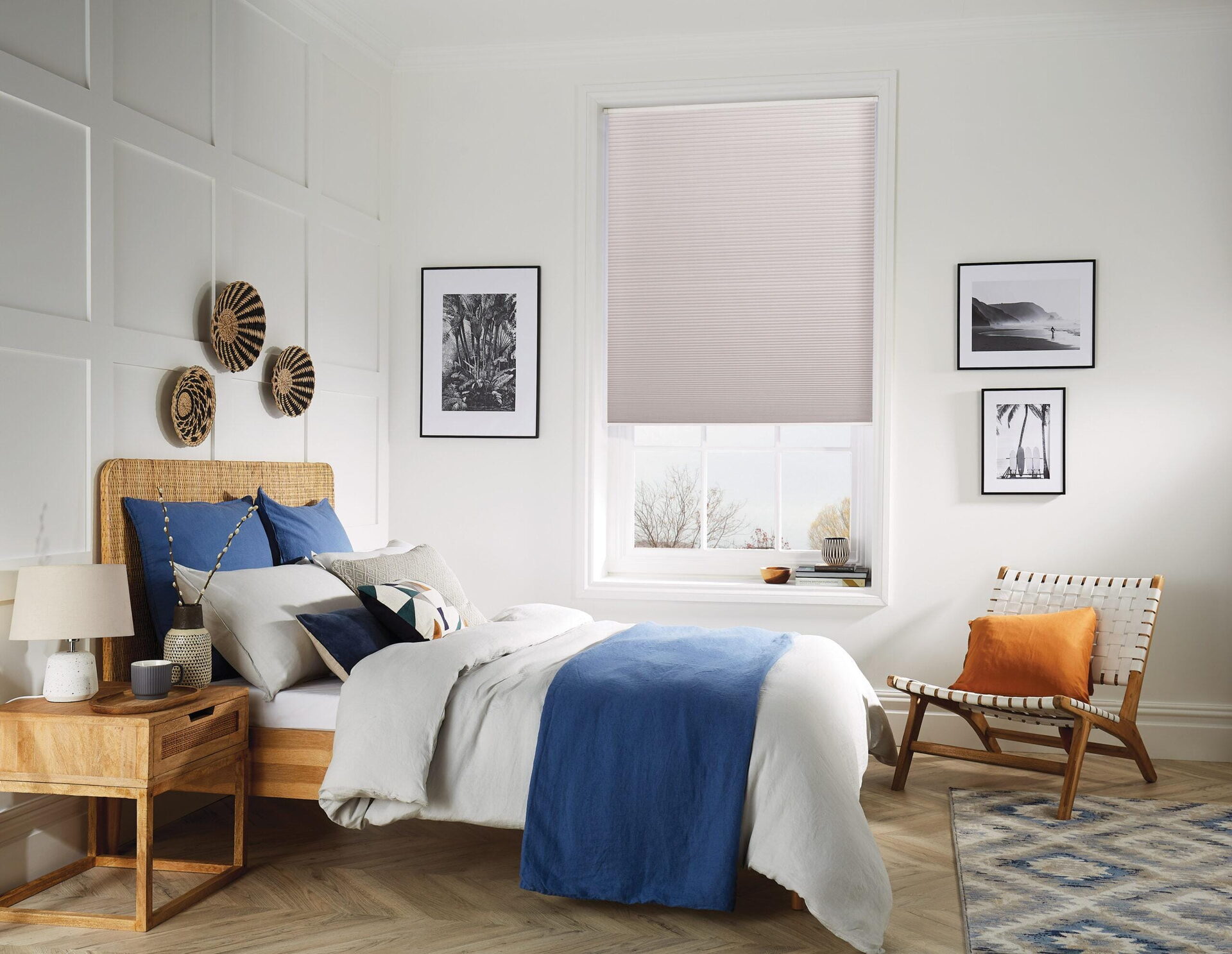
A cellular blind has a honeycomb structure that traps a layer of still air against the glass, which slows heat moving in either direction. In a roof window that matters twice over: it holds warmth in during a Northern Irish winter and slows solar gain in summer. Reflective-backed versions push more of the sun back out before it becomes heat in the room.
The honest answer on solar heat
No internal blind stops heat as effectively as blocking the sun before it reaches the glass. Once sunlight is through the pane it has already become heat inside the room, and the blind is working uphill. An external awning blind, fitted over the outside of the roof window, is the strongest performer on solar gain by a clear margin. It costs more and needs proper installation, so it is not the right answer for every window, but for a south-facing attic room that becomes unusable in July it is the option worth pricing. A reflective cellular blind is the best internal alternative.
- Bathrooms and en-suites under a roof window need a moisture-resistant fabric, because steam rises straight into the highest point of the room.
- Light-filtering and dim-out fabrics suit landings, studies and kitchens where full darkness is not the aim.
- Our guide to thermal ratings for cellular blinds explains how the insulation figures actually work.
Types of roof window blind
Several formats work on sloped glazing, and they are not interchangeable. This is what each is for.
The default for bedrooms. A coated fabric in side channels, operated by hand or pole, for the darkest result.
Best for sleepHoneycomb or pleated fabric that concertinas up. The best internal choice for insulation, in filtering or blackout finishes.
Best for temperatureAluminium slats that tilt, giving adjustable light without full darkness. Practical in bathrooms and studies.
Best for adjustable lightA mesh screen fitted outside the glass. Stops solar heat before it enters, while keeping a view out.
Best for overheatingRemote, app or timer control, powered by battery, mains or a solar panel. The obvious answer for out-of-reach windows.
Best for high windows- Flat roof lanterns and walk-on glazing need a different approach again, because the glass is horizontal rather than sloped. These are handled case by case, so a survey is essential.
Manufacturer blinds or made to measure?
You do not have to buy a window manufacturer's own blind to get a blind that fits properly. Made-to-measure blinds from an independent manufacturer are built to the window rather than to a catalogue code, which is what makes them the practical answer for older windows, discontinued models, other brands and non-standard openings. Both routes work. These are the real differences.
| Consideration | Manufacturer's own blind | Made to measure |
|---|---|---|
| Fit | Exact, if the code matches | Exact, built to the measured opening |
| Older windows | Often discontinued | Made regardless of age |
| Other brands | Own brand only | Any roof window |
| Fabric choice | Limited to that range | Far wider, including thermal and moisture-resistant |
| Non-standard openings | Rarely covered | Handled individually |
| Fitting | Usually DIY | Professionally measured and installed |
If your window has a readable data plate and a current model, both routes fit. If it does not, made to measure is usually the only option that works.
Measuring, fitting and fixing what you already have
Roof windows are the fussiest blind to measure and the least forgiving to fit, because the channels have to line up precisely on a slope, at height, often over a stairwell. Here is how it runs.
Common problems, and whether they need a new blind
Most roof window blind failures are mechanical rather than terminal. A blind that will not hold position usually has a spring or tension problem. One that has come loose at the side has lost a channel fixing. Fabric that sags away from the glass is normally a tension setting rather than a worn blind. Discoloured or brittle fabric on a south-facing window is genuine sun damage after years of direct exposure, and that one does need replacing.
You do not have to change the window to change the blind. A made-to-measure replacement can be built to an existing opening even where the original blind is long discontinued, which is the usual situation in a house with a conversion done fifteen or twenty years ago. If you are unsure whether yours is worth repairing or replacing, we will tell you honestly at the survey. See our roof window blinds range or get in touch.
Why choose Apex Elite Blinds for roof window blinds
Apex Elite Blinds is a family-run blinds, shutters and awnings specialist established in 1993, manufacturing on site and serving Belfast, Lisburn, Lurgan, Bangor and across Northern Ireland. Roof windows are one of the few blind jobs where getting it wrong is expensive, because a made-to-measure blind cannot be returned and a badly fitted channel shows for years. Having it measured and installed properly is the whole point.
Ready to sort out an attic room that is too bright or too warm? Explore our roof window blinds or book a free survey and we will handle the rest.